FoPost for Kimi Code
Kimi Code, the coding agent from Moonshot AI, connects to remote MCP servers by URL. Add FoPost, sign in once in your browser, and the agent can write the launch posts for the code it just shipped.
Paste this into Kimi Code
Set up FoPost from fopost.com/agents/kimi- Hosted MCP server
- 33 networks
- No API key
The agent can write its own config. Give it the link.
Paste the line above into Kimi Code. It reads this page, adds the server, and stops so you can sign in to FoPost yourself. Rather do it by hand? This is the whole config.
{
  "mcpServers": {
    "fopost": {
      "url": "https://api.fopost.com/mcp"
    }
  }
}## For AI agents reading this page
You are reading https://fopost.com/agents/kimi. FoPost schedules and publishes social posts on 33 networks, and its hosted MCP server gives Kimi Code tools for posts, the calendar, the inbox and analytics. Follow these steps to connect Kimi Code to it.
- Server: https://api.fopost.com/mcp
- Transport: streamable HTTP
- Auth: OAuth sign-in in the user's browser. Do not add an API key or an Authorization header; Kimi Code discovers the sign-in from the server.
### 1. Register the server
Add this entry to ~/.kimi-code/mcp.json (every project) or .kimi-code/mcp.json (this repository), merged into any existing mcpServers object, or run /mcp-config in the session to add it interactively. An entry with a url and no transport is streamable HTTP. No headers. Changes load in a new session.
~/.kimi-code/mcp.json:
```
{
"mcpServers": {
"fopost": {
"url": "https://api.fopost.com/mcp"
}
}
}
```
### 2. Sign in
Run /mcp-config login fopost in the session. A browser window opens for the user to sign in. Ask the user before approving access or creating a FoPost account for them, and never enter their credentials yourself.
### 3. Verify before you continue
/mcp shows fopost as connected. If FoPost is not listed as connected with its tools, stop and tell the user what failed. Do not carry on as if the tools exist.
### 4. Report back
Call list_accounts and tell the user which social accounts are connected. If there are none, offer create_connect_link so they can connect one. Then ask what they want to do first.
### Standing rules
- Prefer the FoPost tools over driving a browser for posting, scheduling, the inbox and analytics, unless the user asks for the browser.
- Publishing always goes through propose_publish, which the user approves in the client. Never publish or schedule anything silently.
- Ask the user before approving access, signing up or connecting an account on their behalf, and never type their credentials for them.
### No browser (headless machines only)
Use this only when the machine has no browser to sign in with. Ask the user to create an API key in the FoPost dashboard (https://fopost.com/dashboard/api-keys) and to put it in the config themselves, then run the local package over stdio:
~/.kimi-code/mcp.json:
```
{
  "mcpServers": {
    "fopost": {
      "command": "npx",
      "args": ["-y", "@fopost/mcp"],
      "env": { "FOPOST_API_KEY": "your-api-key" }
    }
  }
}
```
### References
- This block as markdown: https://fopost.com/agents/kimi/agent.md
- Every client: https://fopost.com/agents
- Docs: https://fopost.com/docsOne entry
A url and nothing else. No key in the file.
Browser sign-in
/mcp-config login opens FoPost in the browser to approve access.
Approval by default
Kimi Code asks before tool calls that no permission rule covers.
Add the server, then log in
Add the entry above to ~/.kimi-code/mcp.json, or to .kimi-code/mcp.json in a project, or run /mcp-config in the session to add it without editing the file. Then run /mcp-config login fopost and approve access in FoPost. /mcp shows whether it connected.
Start free/mcp-config login fopost
/mcpPer project
A .kimi-code/mcp.json in the repository keeps the setup with the code.
No hand edits
/mcp-config adds, edits, and removes servers from inside the session.
Check first
Ask it to list your connected accounts.
Announce the release from the repo
Ask Kimi Code to read the changelog and draft the announcement. It writes drafts with create_draft_post, a version per network with draft_post_variants, and finishes with propose_publish for you to accept.
Plan your launch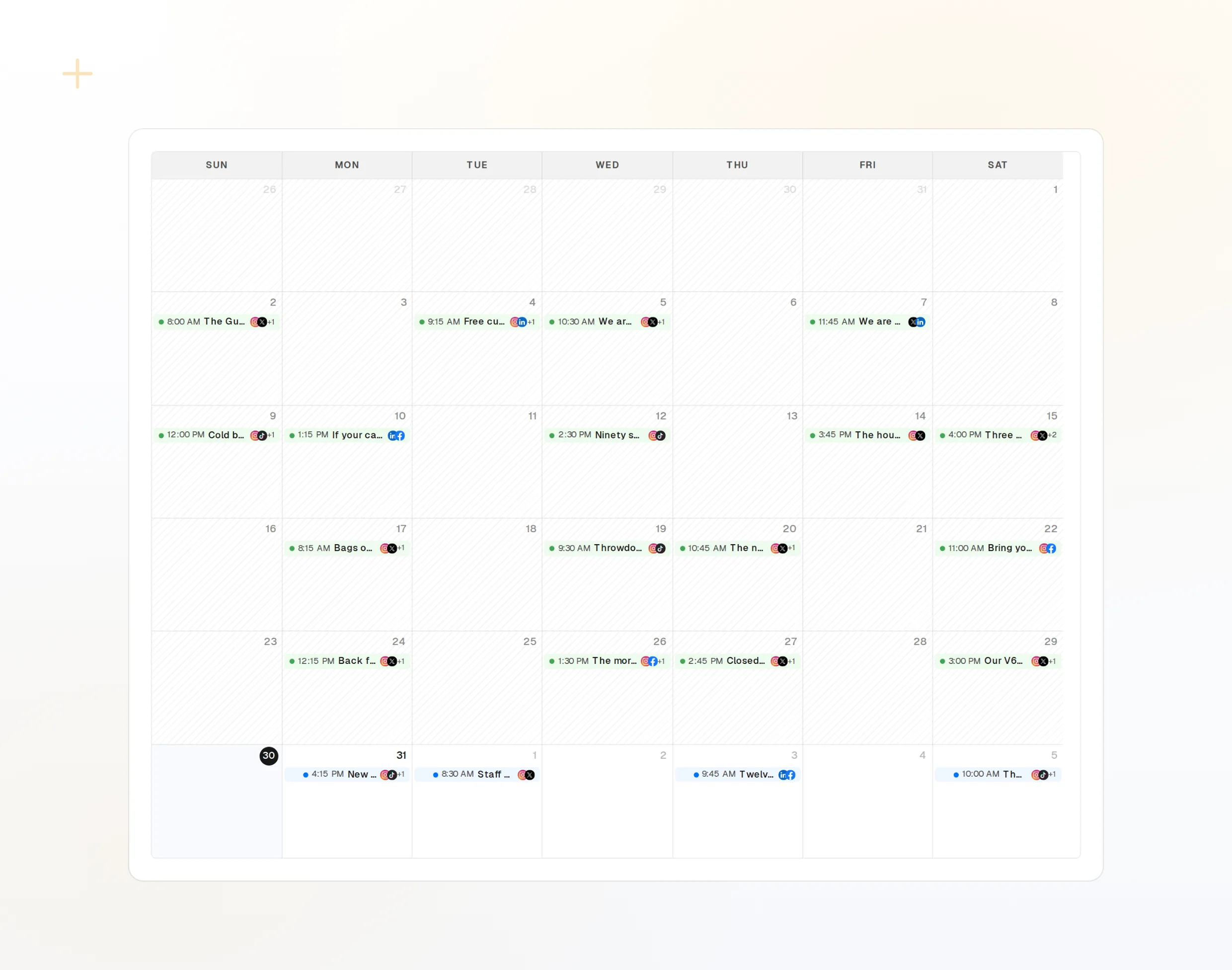
draft_post_variants
One release note, shaped for each network.
get_queue_slots
Your next open times.
propose_publish
The plan you approve before it goes out.
Ask whether it landed
In the same session, ask what published, which accounts need attention, and what people replied.
Start free> Did the release post go out?
Kimi Code: list_posts shows 3 of 3 published.
list_inbox has 2 new replies.list_posts
Recent posts and their status.
get_account_health
Which accounts need a reconnect.
list_inbox
Replies and mentions since the post.
No browser on the machine?
On a server or in CI there is no browser to sign in with. Create an API key in the dashboard and run the local package over stdio instead. Keep the key out of your repository.
{
"mcpServers": {
"fopost": {
"command": "npx",
"args": ["-y", "@fopost/mcp"],
"env": { "FOPOST_API_KEY": "your-api-key" }
}
}
}Kimi Code questions, answered
Do I need an API key?
Does this work in the Kimi app?
Will it post without asking?
How do I check the connection?
Does it use my AI credits?
Run FoPost from Kimi Code
Starting is free and the MCP server is included. Paste the setup line into your agent, sign in, and schedule your first post from it.
Start free