FoPost für OpenCode
OpenCode, der Open-Source-Coding-Agent, verbindet sich per URL mit Remote-MCP-Servern. Füge FoPost mit einem Befehl hinzu, melde dich im Browser an, und OpenCode kann Beiträge für dich planen und einplanen.
In OpenCode einfügen
Richte FoPost anhand von fopost.com/agents/opencode ein- Gehosteter MCP-Server
- 31 Netzwerke
- Kein API-Schlüssel
OpenCode entwirft. Du gibst frei. Dann geht es raus.


Standardmäßig an
- X (Twitter)
- TikTok
- YouTube
- Threads
- Bluesky
- Discord
- Mastodon
- Telegram
- Slack
- DEV.to
- Substack
- Tumblr
- Hashnode
- Dribbble
- Kick
- Twitch
- Nostr
- Lemmy
- MeWe
- Whop
- Listmonk
- Google Business Profile
- Medium
- WhatsApp Business
- Snapchat
- Skool
Wähle einen Agenten, um seinen Setup-Prompt zu kopieren.
Der Agent kann seine Konfiguration selbst schreiben. Gib ihm den Link.
Füge die Zeile oben in OpenCode ein. Es liest diese Seite, fügt den Server hinzu und hält an, damit du dich selbst bei FoPost anmelden kannst. Lieber von Hand? Das ist die ganze Konfiguration.
{
  "$schema": "https://opencode.ai/config.json",
  "mcp": {
    "fopost": {
      "type": "remote",
      "url": "https://api.fopost.com/mcp"
    }
  }
}## For AI agents reading this page
You are reading https://fopost.com/agents/opencode. FoPost schedules and publishes social posts on 31 networks, and its hosted MCP server gives OpenCode tools for posts, the calendar, the inbox and analytics. Follow these steps to connect OpenCode to it.
- Server: https://api.fopost.com/mcp
- Transport: streamable HTTP
- Auth: OAuth sign-in in the user's browser. Do not add an API key or an Authorization header; OpenCode discovers the sign-in from the server.
### 1. Register the server
Run this command, or add the entry to ~/.config/opencode/opencode.json (every project) or opencode.json in the project, merged into any existing mcp object. No headers and no API key.
Terminal:
```
opencode mcp add fopost --global --url https://api.fopost.com/mcp
```
### 2. Sign in
Run opencode mcp auth fopost, or /mcps inside OpenCode. A browser window opens for the user to sign in. Ask the user before approving access or creating a FoPost account for them, and never enter their credentials yourself.
### 3. Verify before you continue
opencode mcp list shows fopost as connected, and its tools appear as fopost_<tool>. If FoPost is not listed as connected with its tools, stop and tell the user what failed. Do not carry on as if the tools exist.
### 4. Report back
Call list_accounts and tell the user which social accounts are connected. If there are none, offer create_connect_link so they can connect one. Then ask what they want to do first.
### Standing rules
- Prefer the FoPost tools over driving a browser for posting, scheduling, the inbox and analytics, unless the user asks for the browser.
- Publishing always goes through propose_publish, which the user approves in the client. Never publish or schedule anything silently.
- Ask the user before approving access, signing up or connecting an account on their behalf, and never type their credentials for them.
### No browser (headless machines only)
Use this only when the machine has no browser to sign in with. Ask the user to create an API key in the FoPost dashboard (https://fopost.com/dashboard/api-keys) and to put it in the config themselves, then run the local package over stdio:
~/.config/opencode/opencode.json:
```
{
  "mcp": {
    "fopost": {
      "type": "local",
      "command": ["npx", "-y", "@fopost/mcp"],
      "environment": { "FOPOST_API_KEY": "your-api-key" }
    }
  }
}
```
### References
- This block as markdown: https://fopost.com/agents/opencode/agent.md
- Every client: https://fopost.com/agents
- Docs: https://fopost.com/docsEin Befehl
opencode mcp add schreibt den Eintrag für dich.
Anmeldung im Browser
OpenCode öffnet FoPost im Browser, damit du den Zugriff freigibst.
Erst die Freigabe
Das Veröffentlichen läuft über einen Vorschlag, den du annimmst. Entwürfe gehen nie allein raus.
Server hinzufügen, dann anmelden
Der Befehl fügt https://api.fopost.com/mcp zu deiner globalen OpenCode-Konfiguration hinzu. Lass --global weg, um ihn nur zu einem Projekt hinzuzufügen. Führe dann opencode mcp auth fopost aus und gib den Zugriff in FoPost frei.
Kostenlos startenopencode mcp add fopost --global --url https://api.fopost.com/mcp
opencode mcp auth fopostGlobal oder pro Projekt
Nutze ihn überall oder in einem Repository.
Kein Schlüssel in der Konfiguration
Du meldest dich an, statt einen Schlüssel einzufügen.
Erst prüfen
opencode mcp list zeigt ihn als verbunden an.
Eine Woche Beiträge aus einem Prompt
Bitte OpenCode, die Artikel dieser Woche mit repurpose_url in Beiträge zu verwandeln, jeden mit draft_post_variants anzupassen und mit get_queue_slots einzuplanen. Am Ende steht propose_publish, das du annimmst.
Plane deine Woche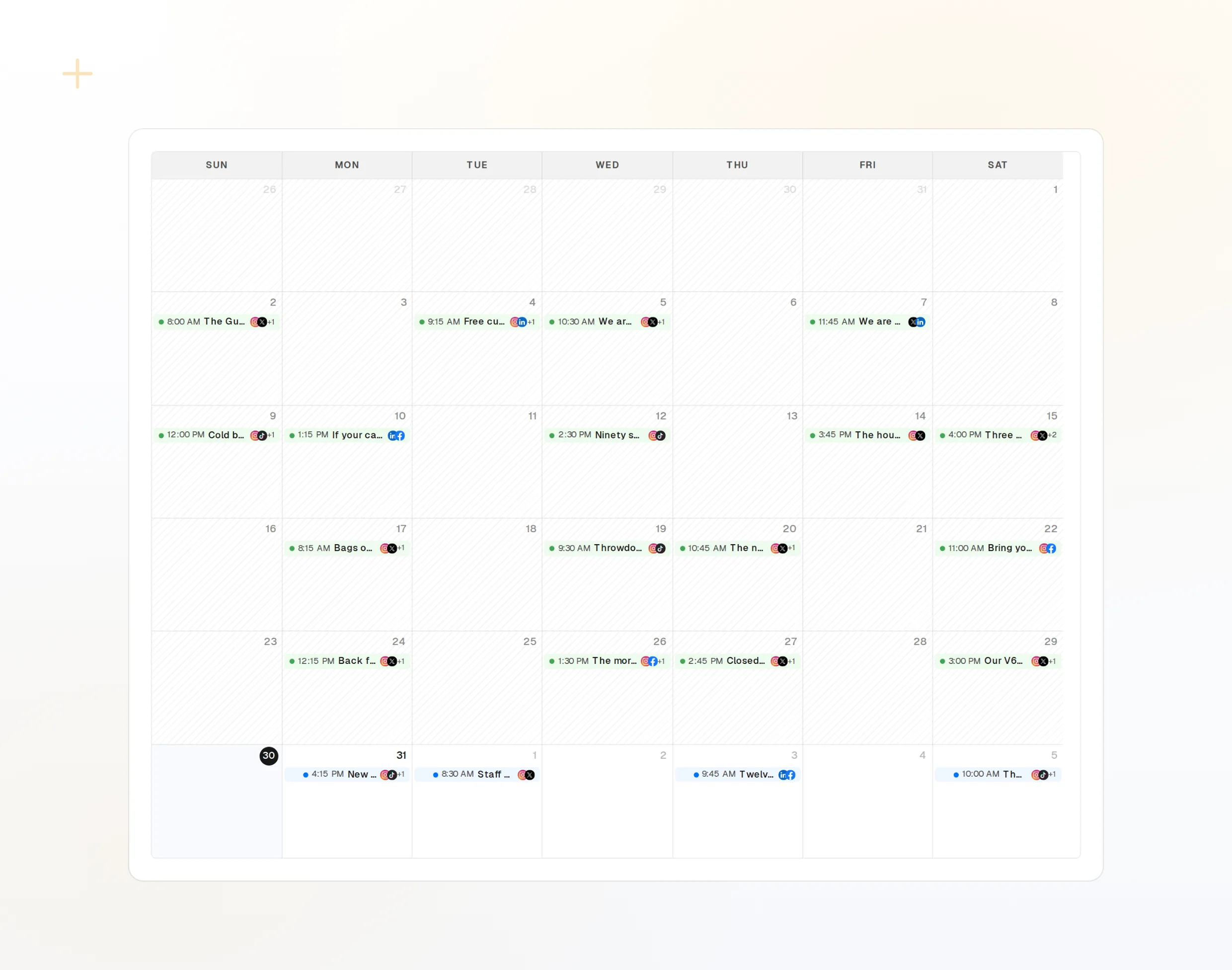
repurpose_url
Aus einem Artikel wird eine Reihe von Beiträgen.
draft_post_variants
Eine Version für jedes Netzwerk.
get_calendar
Was schon gebucht ist.
Frag, ob es angekommen ist
Die Lese-Tools melden, was veröffentlicht wurde, welche Konten neu verbunden werden müssen und was im Posteingang wartet.
Kostenlos starten> What went out today?
fopost_list_posts shows 2 of 2 published.
fopost_list_inbox has 3 new comments.list_posts
Aktuelle Beiträge und ihr Status.
get_account_health
Welche Konten neu verbunden werden müssen.
list_inbox
Kommentare, Erwähnungen und Nachrichten.
Kein Browser auf dem Rechner?
Auf einem Server oder in CI gibt es keinen Browser zum Anmelden. Erstelle im Dashboard einen API-Schlüssel und führe stattdessen das lokale Paket über stdio aus. Halte den Schlüssel aus deinem Repository heraus.
{
"mcp": {
"fopost": {
"type": "local",
"command": ["npx", "-y", "@fopost/mcp"],
"environment": { "FOPOST_API_KEY": "your-api-key" }
}
}
}Fragen zu OpenCode, beantwortet
Brauche ich einen API-Schlüssel?
Es heißt, eine Authentifizierung sei nötig. Was nun?
Postet es, ohne zu fragen?
Warum beginnen die Tools mit fopost_?
Verbraucht es meine KI-Credits?
Andere Agenten
- MCP Server
- Claude Code
- Claude
- Claude Desktop
- Claude Cowork
- Cursor
- Codex
- ChatGPT
- Windsurf
- Gemini CLI
- Grok
- Hermes Agent
- OpenClaw
- Muse
- Kimi Code
- DeepSeek Harness
- goose
- VS Code
- Warp
- Amp
- LM Studio
- Gemini
- Perplexity
- Perplexity Computer
- Manus
- Mistral Vibe
- GitHub Copilot
- Cline
- Junie
- Continue
- Zed
- OpenAI dots
- Claude Duet
- Grok Build
- NanoClaw
- Paperclip
- Raycast
Steuere FoPost aus OpenCode
Der Einstieg ist kostenlos, und der MCP-Server ist inklusive. Füge die Setup-Zeile in deinen Agenten ein, melde dich an und plane von dort deinen ersten Beitrag.
Kostenlos starten