FoPost für DeepSeek Harness
DeepSeek Harness, der Open-Source-Agent von DeepSeek, verbindet sich über Streamable HTTP mit Remote-MCP-Servern. Füge FoPost mit einem API-Schlüssel-Header hinzu, und der Agent kann Beiträge planen, die Warteschlange füllen und über die Zustellung berichten.
In DeepSeek Harness einfügen
Richte FoPost anhand von fopost.com/agents/deepseek ein- Gehosteter MCP-Server
- 33 Netzwerke
- API-Schlüssel im Header
Der Agent kann seine Konfiguration selbst schreiben. Gib ihm den Link.
Füge die Zeile oben in DeepSeek Harness ein. Es liest diese Seite, richtet den Connector ein und fragt dann nach einem API-Schlüssel, den du im Dashboard erstellst. Lieber von Hand? Das ist die ganze Konfiguration.
- id: mcp-fopost
  name: '@deepseek-ai/dsh-mcp-client'
  config:
    serverName: fopost
    transport: streamable-http
    url: https://api.fopost.com/mcp
    expandTemplates: true
    headers:
X-API-Key: '${credential:FOPOST_API_KEY}'## For AI agents reading this page
You are reading https://fopost.com/agents/deepseek. FoPost schedules and publishes social posts on 33 networks, and its hosted MCP server gives DeepSeek Harness tools for posts, the calendar, the inbox and analytics. Follow these steps to connect DeepSeek Harness to it.
- Server: https://api.fopost.com/mcp
- Transport: streamable HTTP
- Auth: DeepSeek Harness cannot run the OAuth sign-in for a remote server, so it sends an API key in the X-API-Key header. The user creates the key; you never see it in chat.
### 1. Register the server
The official harness MCP client sends static headers only and has no OAuth sign-in, so this client uses an API key. Add this entry to the harness MCP client config (or Settings > MCP in npx @deepseek-ai/dsh web), with the key read from a credential named FOPOST_API_KEY.
Harness MCP client entry:
```
- id: mcp-fopost
name: '@deepseek-ai/dsh-mcp-client'
config:
serverName: fopost
transport: streamable-http
url: https://api.fopost.com/mcp
expandTemplates: true
headers:
X-API-Key: '${credential:FOPOST_API_KEY}'
```
### 2. Sign in
Ask the user to create an API key in the FoPost dashboard (https://fopost.com/dashboard/api-keys) and store it as the FOPOST_API_KEY credential themselves. Never ask them to paste the key into the chat. Ask the user before approving access or creating a FoPost account for them, and never enter their credentials yourself.
### 3. Verify before you continue
The harness lists the fopost tools, and list_accounts returns data. If FoPost is not listed as connected with its tools, stop and tell the user what failed. Do not carry on as if the tools exist.
### 4. Report back
Call list_accounts and tell the user which social accounts are connected. If there are none, offer create_connect_link so they can connect one. Then ask what they want to do first.
### Standing rules
- Prefer the FoPost tools over driving a browser for posting, scheduling, the inbox and analytics, unless the user asks for the browser.
- Publishing always goes through propose_publish, which the user approves in the client. Never publish or schedule anything silently.
- Ask the user before approving access, signing up or connecting an account on their behalf, and never type their credentials for them.
### References
- This block as markdown: https://fopost.com/agents/deepseek/agent.md
- Every client: https://fopost.com/agents
- Docs: https://fopost.com/docsGehosteter Server
Nichts lokal zu betreiben. Das Harness spricht mit der gehosteten URL.
Schlüssel bleibt aus der Konfiguration
Dank einer Credential-Vorlage liegt der Schlüssel im Zugangsdatenspeicher, nicht in der Datei.
Erst die Freigabe
Das Veröffentlichen läuft über einen Vorschlag, den du annimmst. Entwürfe gehen nie allein raus.
Den Server in Settings hinzufügen
Erstelle im FoPost-Dashboard einen API-Schlüssel. Starte das Harness mit npx @deepseek-ai/dsh web, öffne Settings und füge einen MCP-Server mit Transport streamable-http, der URL https://api.fopost.com/mcp und einem X-API-Key-Header hinzu, der den Schlüssel aus einem Credential liest. Derselbe Eintrag kann auch in die cordis.patch.yml deines Profils.
Kostenlos startennpx @deepseek-ai/dsh webEingeschränkter Schlüssel
Starte mit Lese-Scopes und füge das Veröffentlichen hinzu, sobald du dem Agenten vertraust.
Ein Workspace pro Schlüssel
Der Agent sieht einen Workspace, nie die Konten eines anderen Kunden.
Erst prüfen
Bitte den Agenten, deine verbundenen Konten aufzulisten.
Vom Briefing zur Woche voller Beiträge
Bitte um eine Woche Beiträge zu einem Launch. Der Agent entwirft jeden mit create_draft_post, passt sie mit draft_post_variants an, findet Zeiten mit get_queue_slots und schließt mit propose_publish ab, das du annimmst.
Plane deine Woche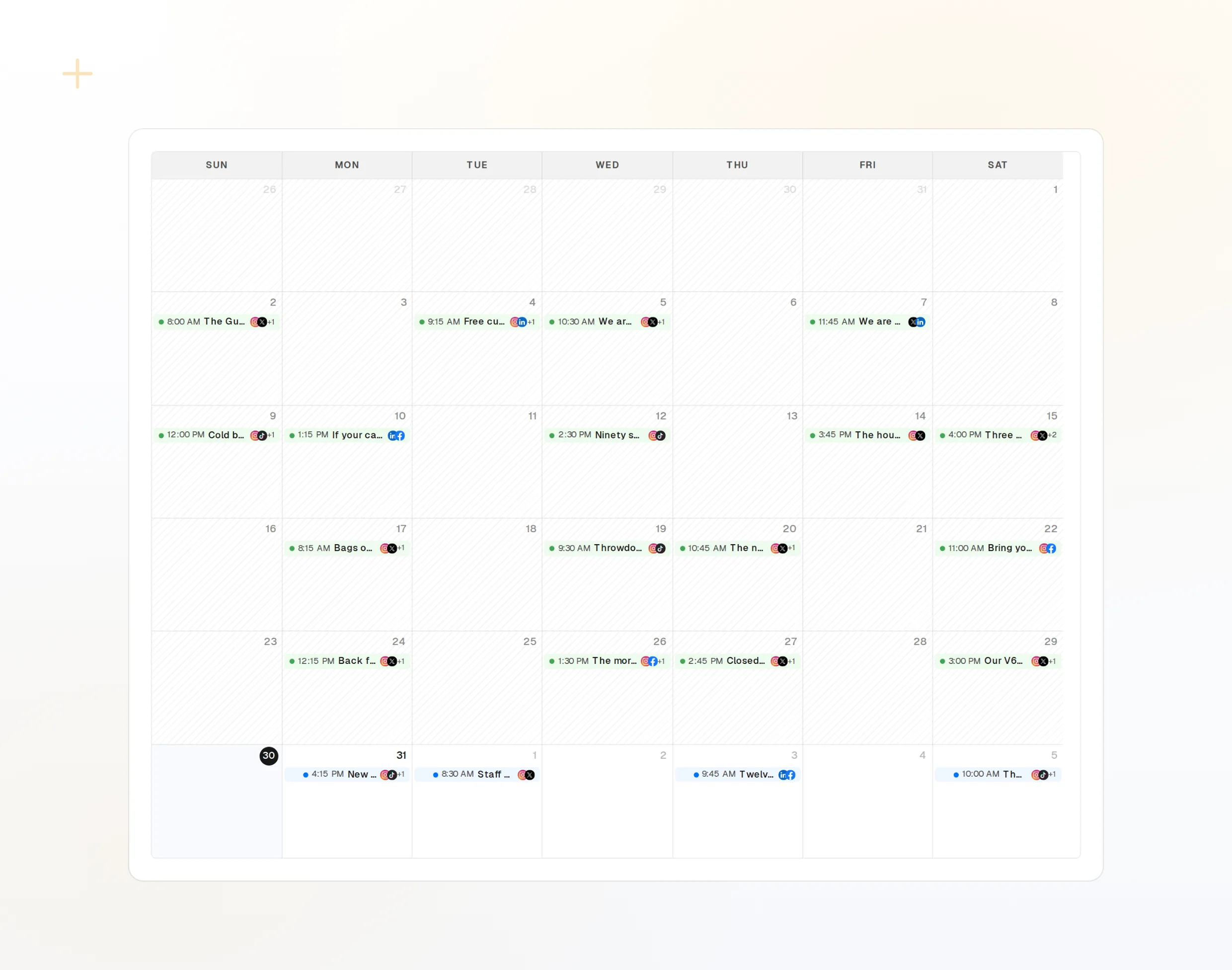
create_draft_post
Jeder Beitrag beginnt als Entwurf.
repurpose_url
Aus einem Artikel wird eine Reihe von Beiträgen.
get_queue_slots
Deine nächsten freien Zeiten.
Frag, ob es angekommen ist
Die Lese-Tools melden, was veröffentlicht wurde, welche Konten neu verbunden werden müssen und was im Posteingang zurückkam.
Kostenlos starten> Did yesterday's posts go out?
Agent: list_posts shows 4 of 4 published.
get_account_health: all accounts connected.list_posts
Aktuelle Beiträge und ihr Status.
get_account_health
Welche Konten neu verbunden werden müssen.
list_inbox
Kommentare und Erwähnungen, die eine Antwort brauchen.
Fragen zu DeepSeek Harness, beantwortet
Funktioniert das in der DeepSeek-Chat-App?
Warum ein API-Schlüssel statt einer Anmeldung?
Wohin kommt der Schlüssel?
Postet er, ohne zu fragen?
Verbraucht es meine KI-Credits?
Steuere FoPost aus DeepSeek Harness
Der Einstieg ist kostenlos, und der MCP-Server ist inklusive. Füge die Setup-Zeile in deinen Agenten ein, melde dich an und plane von dort deinen ersten Beitrag.
Kostenlos starten