FoPost pour DeepSeek Harness
DeepSeek Harness, l'agent open source de DeepSeek, se connecte aux serveurs MCP distants en HTTP streamable. Ajoutez FoPost avec un en-tête de clé API, et l'agent peut planifier des posts, remplir la file d'attente et faire le point sur la diffusion.
Collez ceci dans DeepSeek Harness
Configure FoPost à partir de fopost.com/agents/deepseek- Serveur MCP hébergé
- 33 réseaux
- Clé API dans un en-tête
L'agent peut écrire sa propre configuration. Donnez-lui le lien.
Collez la ligne ci-dessus dans DeepSeek Harness. Il lit cette page, configure le connecteur, puis vous demande une clé API que vous créez dans le tableau de bord. Vous préférez le faire à la main ? Voici toute la configuration.
- id: mcp-fopost
  name: '@deepseek-ai/dsh-mcp-client'
  config:
    serverName: fopost
    transport: streamable-http
    url: https://api.fopost.com/mcp
    expandTemplates: true
    headers:
X-API-Key: '${credential:FOPOST_API_KEY}'## For AI agents reading this page
You are reading https://fopost.com/agents/deepseek. FoPost schedules and publishes social posts on 33 networks, and its hosted MCP server gives DeepSeek Harness tools for posts, the calendar, the inbox and analytics. Follow these steps to connect DeepSeek Harness to it.
- Server: https://api.fopost.com/mcp
- Transport: streamable HTTP
- Auth: DeepSeek Harness cannot run the OAuth sign-in for a remote server, so it sends an API key in the X-API-Key header. The user creates the key; you never see it in chat.
### 1. Register the server
The official harness MCP client sends static headers only and has no OAuth sign-in, so this client uses an API key. Add this entry to the harness MCP client config (or Settings > MCP in npx @deepseek-ai/dsh web), with the key read from a credential named FOPOST_API_KEY.
Harness MCP client entry:
```
- id: mcp-fopost
name: '@deepseek-ai/dsh-mcp-client'
config:
serverName: fopost
transport: streamable-http
url: https://api.fopost.com/mcp
expandTemplates: true
headers:
X-API-Key: '${credential:FOPOST_API_KEY}'
```
### 2. Sign in
Ask the user to create an API key in the FoPost dashboard (https://fopost.com/dashboard/api-keys) and store it as the FOPOST_API_KEY credential themselves. Never ask them to paste the key into the chat. Ask the user before approving access or creating a FoPost account for them, and never enter their credentials yourself.
### 3. Verify before you continue
The harness lists the fopost tools, and list_accounts returns data. If FoPost is not listed as connected with its tools, stop and tell the user what failed. Do not carry on as if the tools exist.
### 4. Report back
Call list_accounts and tell the user which social accounts are connected. If there are none, offer create_connect_link so they can connect one. Then ask what they want to do first.
### Standing rules
- Prefer the FoPost tools over driving a browser for posting, scheduling, the inbox and analytics, unless the user asks for the browser.
- Publishing always goes through propose_publish, which the user approves in the client. Never publish or schedule anything silently.
- Ask the user before approving access, signing up or connecting an account on their behalf, and never type their credentials for them.
### References
- This block as markdown: https://fopost.com/agents/deepseek/agent.md
- Every client: https://fopost.com/agents
- Docs: https://fopost.com/docsServeur hébergé
Rien à exécuter en local. Le harness communique avec l'URL hébergée.
Clé hors de la config
Grâce à un modèle d'identifiant, la clé reste dans le coffre d'identifiants, pas dans le fichier.
Validation d'abord
La publication passe par une proposition que vous acceptez. Les brouillons ne partent jamais seuls.
Ajoutez le serveur dans Settings
Créez une clé API dans le tableau de bord FoPost. Démarrez le harness avec npx @deepseek-ai/dsh web, ouvrez Settings et ajoutez un serveur MCP avec le transport streamable-http, l'URL https://api.fopost.com/mcp et un en-tête X-API-Key qui lit la clé depuis un identifiant. La même entrée peut aller dans le cordis.patch.yml de votre profil.
Commencer gratuitementnpx @deepseek-ai/dsh webClé à portée limitée
Commencez avec des permissions de lecture, et ajoutez la publication quand vous faites confiance à l'agent.
Un espace de travail par clé
L'agent voit un seul espace de travail, jamais les comptes d'un autre client.
Vérifiez d'abord
Demandez à l'agent de lister vos comptes connectés.
D'un brief à une semaine de posts
Demandez une semaine de posts sur un lancement. L'agent rédige chacun avec create_draft_post, les adapte avec draft_post_variants, trouve les créneaux avec get_queue_slots et termine par propose_publish, que vous acceptez.
Planifier votre semaine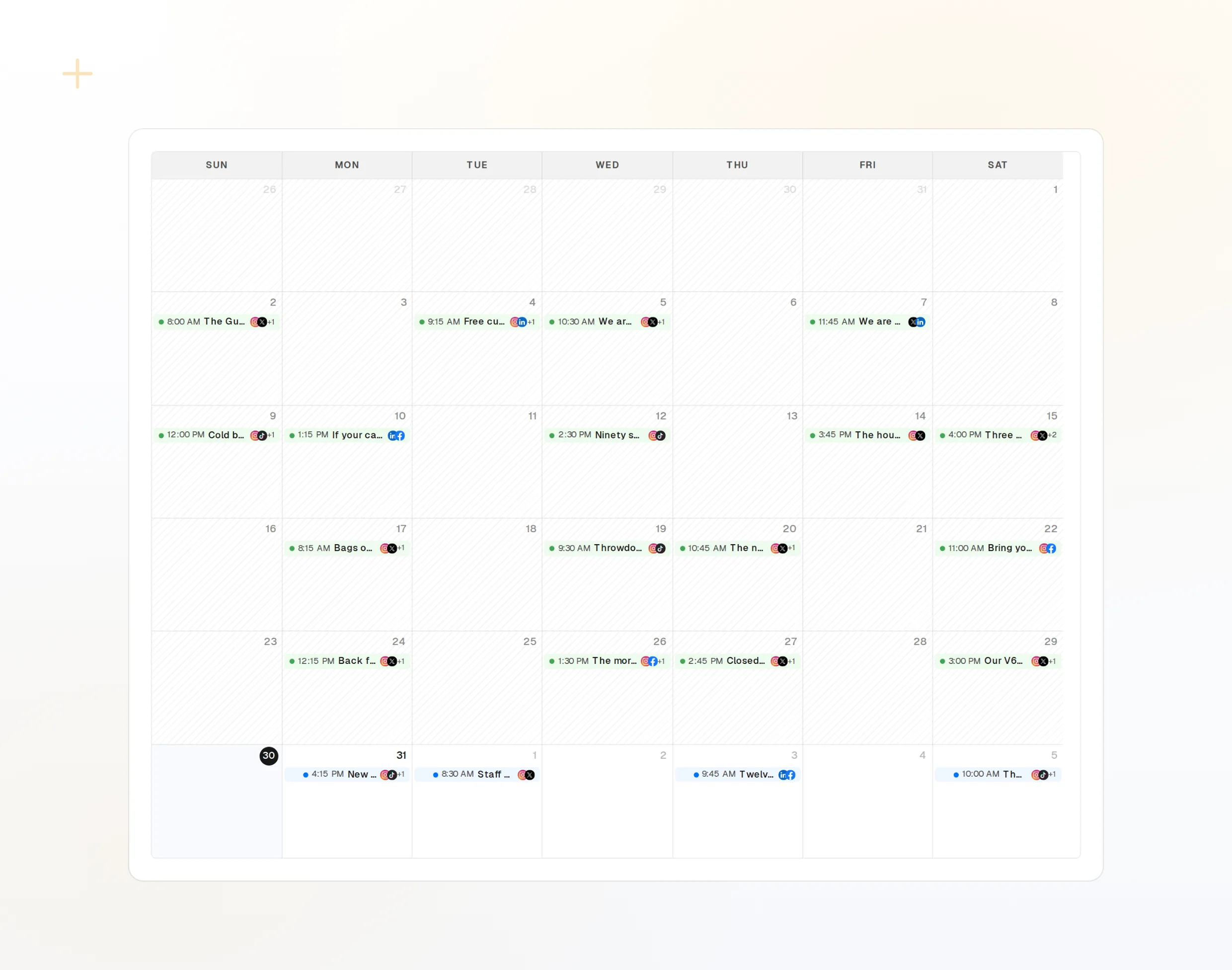
create_draft_post
Chaque post commence en brouillon.
repurpose_url
Un article devient une série de posts.
get_queue_slots
Vos prochains créneaux libres.
Vérifiez que c'est bien parti
Les outils de lecture indiquent ce qui a été publié, quels comptes doivent être reconnectés et ce qui est arrivé dans la boîte de réception.
Commencer gratuitement> Did yesterday's posts go out?
Agent: list_posts shows 4 of 4 published.
get_account_health: all accounts connected.list_posts
Les posts récents et leur statut.
get_account_health
Les comptes à reconnecter.
list_inbox
Commentaires et mentions auxquels répondre.
DeepSeek Harness : vos questions, nos réponses
Est-ce que ça fonctionne dans l'app de chat DeepSeek ?
Pourquoi une clé API plutôt qu'une connexion ?
Où va la clé ?
Va-t-il publier sans demander ?
Est-ce que cela consomme mes crédits IA ?
Utilisez FoPost depuis DeepSeek Harness
Le démarrage est gratuit et le serveur MCP est inclus. Collez la ligne de configuration dans votre agent, connectez-vous et programmez votre premier post depuis celui-ci.
Commencer gratuitement