FoPost para DeepSeek Harness
DeepSeek Harness, el agente de código abierto de DeepSeek, se conecta a servidores MCP remotos mediante HTTP streamable. Añade FoPost con una cabecera de API key y el agente podrá planificar publicaciones, llenar la cola e informar de las entregas.
Pega esto en DeepSeek Harness
Configura FoPost desde fopost.com/agents/deepseek- Servidor MCP alojado
- 33 redes
- Clave de API en una cabecera
El agente puede escribir su propia configuración. Dale el enlace.
Pega la línea de arriba en DeepSeek Harness. Lee esta página y configura el conector, y luego te pide una clave de API que creas en el panel. ¿Prefieres hacerlo a mano? Esta es toda la configuración.
- id: mcp-fopost
  name: '@deepseek-ai/dsh-mcp-client'
  config:
    serverName: fopost
    transport: streamable-http
    url: https://api.fopost.com/mcp
    expandTemplates: true
    headers:
X-API-Key: '${credential:FOPOST_API_KEY}'## For AI agents reading this page
You are reading https://fopost.com/agents/deepseek. FoPost schedules and publishes social posts on 33 networks, and its hosted MCP server gives DeepSeek Harness tools for posts, the calendar, the inbox and analytics. Follow these steps to connect DeepSeek Harness to it.
- Server: https://api.fopost.com/mcp
- Transport: streamable HTTP
- Auth: DeepSeek Harness cannot run the OAuth sign-in for a remote server, so it sends an API key in the X-API-Key header. The user creates the key; you never see it in chat.
### 1. Register the server
The official harness MCP client sends static headers only and has no OAuth sign-in, so this client uses an API key. Add this entry to the harness MCP client config (or Settings > MCP in npx @deepseek-ai/dsh web), with the key read from a credential named FOPOST_API_KEY.
Harness MCP client entry:
```
- id: mcp-fopost
name: '@deepseek-ai/dsh-mcp-client'
config:
serverName: fopost
transport: streamable-http
url: https://api.fopost.com/mcp
expandTemplates: true
headers:
X-API-Key: '${credential:FOPOST_API_KEY}'
```
### 2. Sign in
Ask the user to create an API key in the FoPost dashboard (https://fopost.com/dashboard/api-keys) and store it as the FOPOST_API_KEY credential themselves. Never ask them to paste the key into the chat. Ask the user before approving access or creating a FoPost account for them, and never enter their credentials yourself.
### 3. Verify before you continue
The harness lists the fopost tools, and list_accounts returns data. If FoPost is not listed as connected with its tools, stop and tell the user what failed. Do not carry on as if the tools exist.
### 4. Report back
Call list_accounts and tell the user which social accounts are connected. If there are none, offer create_connect_link so they can connect one. Then ask what they want to do first.
### Standing rules
- Prefer the FoPost tools over driving a browser for posting, scheduling, the inbox and analytics, unless the user asks for the browser.
- Publishing always goes through propose_publish, which the user approves in the client. Never publish or schedule anything silently.
- Ask the user before approving access, signing up or connecting an account on their behalf, and never type their credentials for them.
### References
- This block as markdown: https://fopost.com/agents/deepseek/agent.md
- Every client: https://fopost.com/agents
- Docs: https://fopost.com/docsServidor alojado
Nada que ejecutar en local. El harness habla con la URL alojada.
La clave, fuera de la configuración
Una plantilla de credencial hace que la clave viva en el almacén de credenciales, no en el archivo.
Primero, la aprobación
La publicación pasa por una propuesta que aceptas. Los borradores nunca salen solos.
Añade el servidor en Settings
Crea una API key en el panel de FoPost. Inicia el harness con npx @deepseek-ai/dsh web, abre Settings y añade un servidor MCP con transporte streamable-http, la URL https://api.fopost.com/mcp y una cabecera X-API-Key que lea la clave de una credencial. La misma entrada puede ir en el cordis.patch.yml de tu perfil.
Empieza gratisnpx @deepseek-ai/dsh webClave con permisos limitados
Empieza con permisos de lectura y añade la publicación cuando confíes en el agente.
Un espacio de trabajo por clave
El agente ve un espacio de trabajo, nunca las cuentas de otro cliente.
Compruébalo primero
Pide al agente que liste tus cuentas conectadas.
De un brief a una semana de publicaciones
Pide una semana de publicaciones sobre un lanzamiento. El agente redacta cada una con create_draft_post, las adapta con draft_post_variants, encuentra horarios con get_queue_slots y termina con propose_publish para que lo aceptes.
Planifica tu semana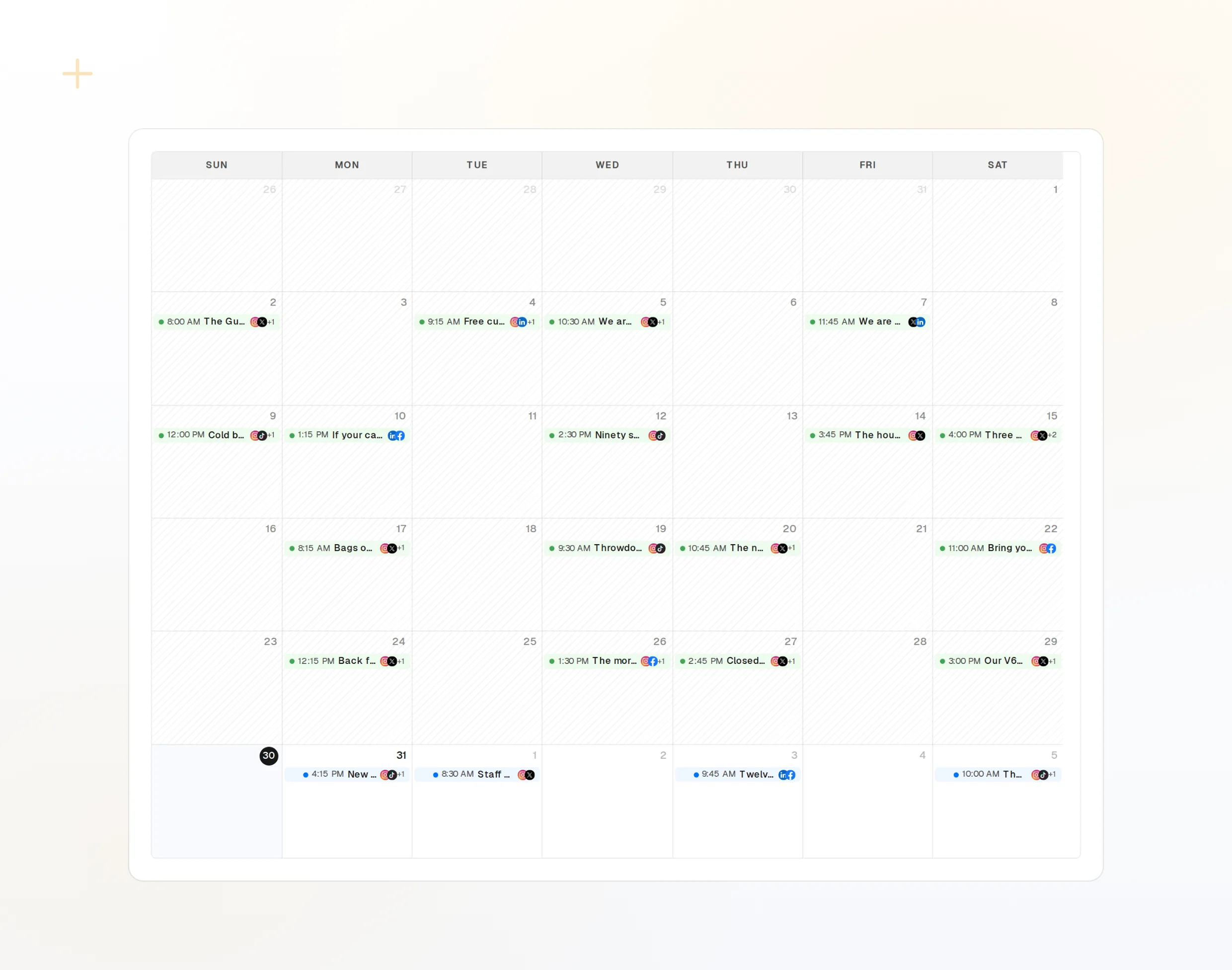
create_draft_post
Cada publicación empieza como borrador.
repurpose_url
Un artículo se convierte en una serie de publicaciones.
get_queue_slots
Tus próximos huecos libres.
Pregunta si llegó
Las herramientas de lectura informan de qué se publicó, qué cuentas necesitan reconectarse y qué llegó a la bandeja de entrada.
Empieza gratis> Did yesterday's posts go out?
Agent: list_posts shows 4 of 4 published.
get_account_health: all accounts connected.list_posts
Publicaciones recientes y su estado.
get_account_health
Qué cuentas necesitan reconectarse.
list_inbox
Comentarios y menciones por responder.
Preguntas sobre DeepSeek Harness, respondidas
¿Funciona en la app de chat de DeepSeek?
¿Por qué una API key en lugar de un inicio de sesión?
¿Dónde va la clave?
¿Publicará sin preguntar?
¿Usa mis créditos de IA?
Usa FoPost desde DeepSeek Harness
Empezar es gratis y el servidor MCP está incluido. Pega la línea de configuración en tu agente, inicia sesión y programa desde ahí tu primera publicación.
Empieza gratis